
Key Point
Eighty percent of enterprise AI work no dey bring value wey person fit measure — no be say the algorithm bad, na because governance no dey, the operating model no arrange well, and dem no get correct business-driven way to sabi which one dey important.
The numbers plenty and, for most boardroom, e dey pain dem well well. As Gartner 2025 enterprise technology survey talk, na like 80 percent of AI work no dey pass pilot stage. McKinsey latest Global AI Survey put the number of organizations wey don scale AI well across plenty business units for just 14 percent. The gap wey dey between AI ambition and AI reality no dey small — e dey grow bigger. And the real reason no be technology. Na because dem no get business-driven way to do AI transformation.
The money wey dem waste for this failure na wa. Industry analysts talk say by 2027, global enterprises go don waste around $3.7 trillion for AI project wey never bring the return wey dem promise. This no be technology problem. The models dey work. The cloud infrastructure don mature. The talent, even as e scarce, dey available. Wetin no dey na the thing wey go connect AI power to business value: governance, operating model design, use-case prioritization, and workforce adoption.
The way things dey fail dey the same everywhere, no mata the industry or country. Enterprise go sabi say AI na strategic priority. One chief data officer or innovation team go start small small pilots — most times na for area wey easy for technical side, no be area wey go touch business well. The pilots go bring fine result for controlled environment. Then, when time reach to scale, the organization go hit wall. No governance framework dey to manage risk. No operating model dey to put AI inside the work wey dem dey do already. No way dey to sabi which use case deserve money and which one dem suppose kill. The pilots go remain pilots. The board go begin doubt. Money go stop.
The first discipline wey separate organizations wey dey win from the rest na serious use-case prioritization. Enterprises wey dey succeed for AI no dey chase every opportunity for the same time. Dem dey start with proper list — normally like 40 to 60 possible use cases across business units — then dem go use structured scoring method to cut am down to 8 to 12 priority initiatives. The scoring criteria dey focus on business well well: how e fit raise revenue, how much money e fit save, whether data dey, how hard the technical side be, how long e go take to bring value, and whether e align with strategy. Dem go put the use cases for impact-versus-feasibility matrix wey separate quick wins from strategic bets, efficiency plays from work wey dem suppose leave for last.
This prioritization discipline dey more important pass any model architecture or technology stack decision. E dey make sure say the organization small small resources — money, talent, executive attention — dey focus on the work wey most likely go bring value wey person fit measure. E dey also create common language between business leaders and technology teams, e go comot ordinary AI excitement put concrete investment case wey board fit look and approve.
The second important discipline na governance — and to talk am well, governance wey dem design for board level, no be one wey dem hand over give IT. The organizations wey dey scale AI well dey get clear answer to some basic questions before dem write even one line of production code: Who dey own AI strategy execution? How dem dey prioritize and approve use cases? Wetin be the ethical red lines? How dem dey measure AI performance and report am to board? Who dey control data access and quality? How dem dey escalate AI risk? Wetin be the build-versus-buy-versus-partner policy? And how dem dey track whether workforce ready?
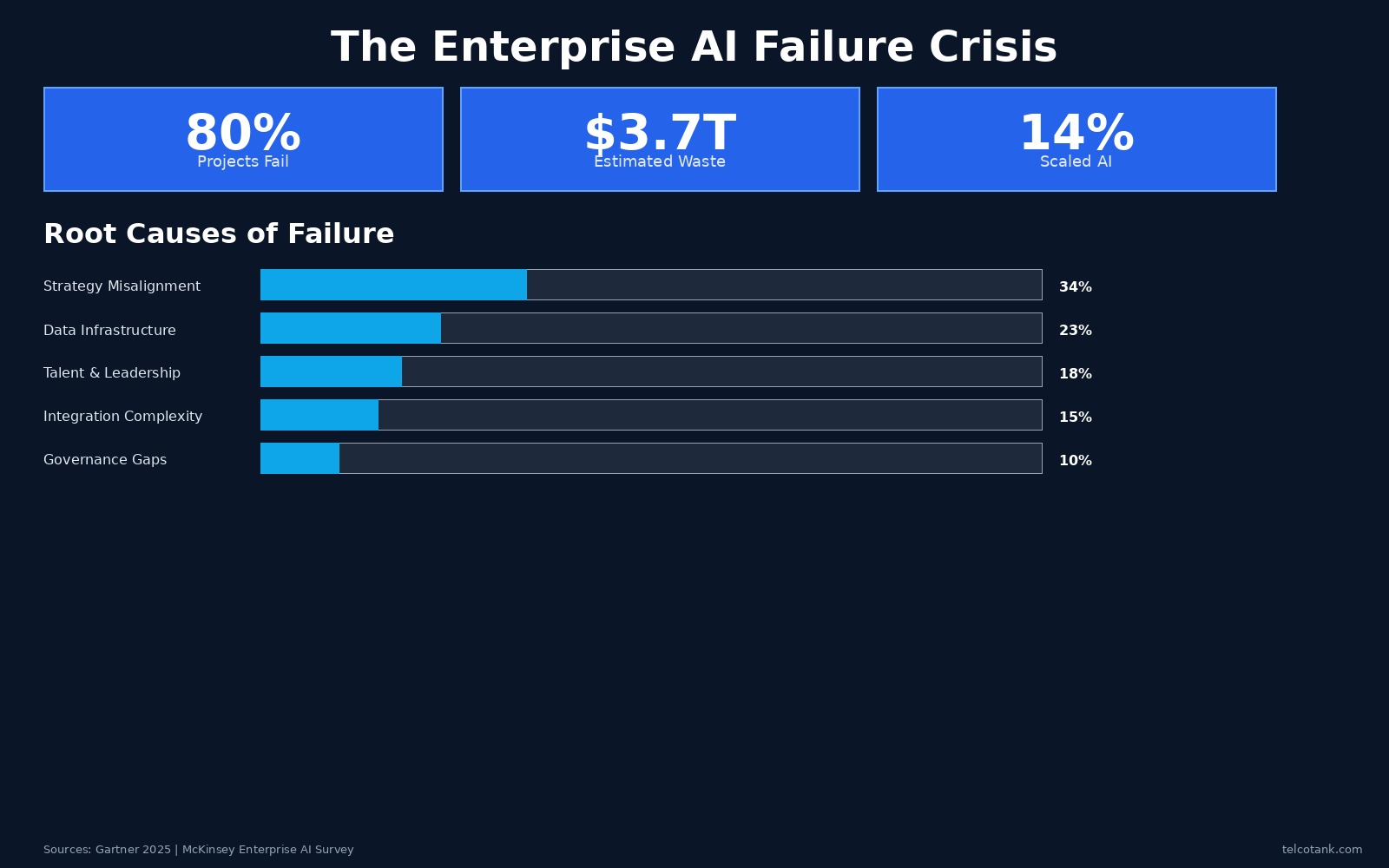
These no be technical questions. Na business questions. And to fail to answer dem na the single biggest reason enterprise AI dey fail. Research from McKinsey show say organizations wey get formal AI governance frameworks dey 2.5 times more likely to scale AI well pass those wey no get. The reason clear: governance dey give the guardrails wey dey allow speed. Without am, every AI work go turn to fresh negotiation over risk, compliance, data access, and accountability — negotiation wey most organizations dey settle by doing nothing.
The third discipline na operating model design. AI no dey succeed when dem just put am on top existing processes like afterthought. E dey succeed when dem redesign the workflow make e become AI-augmented — when the operating model dey clearly define how human decision and AI power dey work together. This mean say dem go establish AI control function wey dey manage how use cases dey enter, how dem dey develop and scale through structured lifecycle. E mean dem go define clear roles: who dey commission AI work, who dey build am, who dey validate am, who dey own am for production, and who dey measure the value. E mean dem go create sprint-based delivery cycles — normally three to four weeks — wey dey allow fast iteration, fast failure, and disciplined scaling of wetin dey work.
The best operating models dey treat AI like portfolio, no be project. Dem dey establish use-case factory — process wey dem fit repeat to move initiatives from idea through piloting to enterprise-wide deployment. Every stage get defined quality gates, value measurement KPIs, and clear accountability. The model dey designed to kill initiatives wey no dey perform with the same seriousness wey e dey scale the ones wey dey work. Na this portfolio discipline dey prevent the wahala wey common well, where dozens of experiment wey no connect dey chop resources without ever reaching the scale wey dem need to bring correct return.
The fourth discipline — and maybe the one wey dem dey underrate pass — na adoption and culture. Plenty book dey on top AI technical side. But book on how to make organizations actually use AI no plenty. Yet workforce adoption na the thing wey dey decide whether AI wey work for technical side go bring business value or just sidon dey do nothing. Organizations wey dey win dey invest heavy for change management, executive coaching, and workforce enablement same way dem dey invest for model development. Dem no dey track only model accuracy but usage rates, how good the human-AI interaction be, and value realization for business-unit level.
The board role for all this matter well well. AI transformation no be technology work wey dem fit hand over give IT and review quarterly. Na strategic transformation wey need active board engagement on governance, risk, investment prioritization, and value measurement. The best enterprises dey establish direct accountability line from AI initiatives go to the board — with regular report on use-case progress, value realization against targets, risk exposure, and workforce readiness. This kind board engagement dey create the organizational pull wey dey drag AI comot from pilot phase enter the operational core of the enterprise.
The phased approach matter too. Organizations wey dey try do everything for one time — governance, operating model, use-case development, and cultural change all together across the whole enterprise — almost always dey fail. The disciplined way na two-phase model. The first phase dey focus on direction and readiness: to assess the organization AI maturity across strategy, data, talent, technology, governance, and culture; to run structured use-case workshops with business unit leaders; to design the governance framework and target operating model; and to produce prioritized roadmap wey board fit look with clear build, pause, or stop decision. Na only after this foundation dey ground the second phase go start: embedded delivery of prioritized use cases through sprint-based cycles, with continuous measurement and value realization.
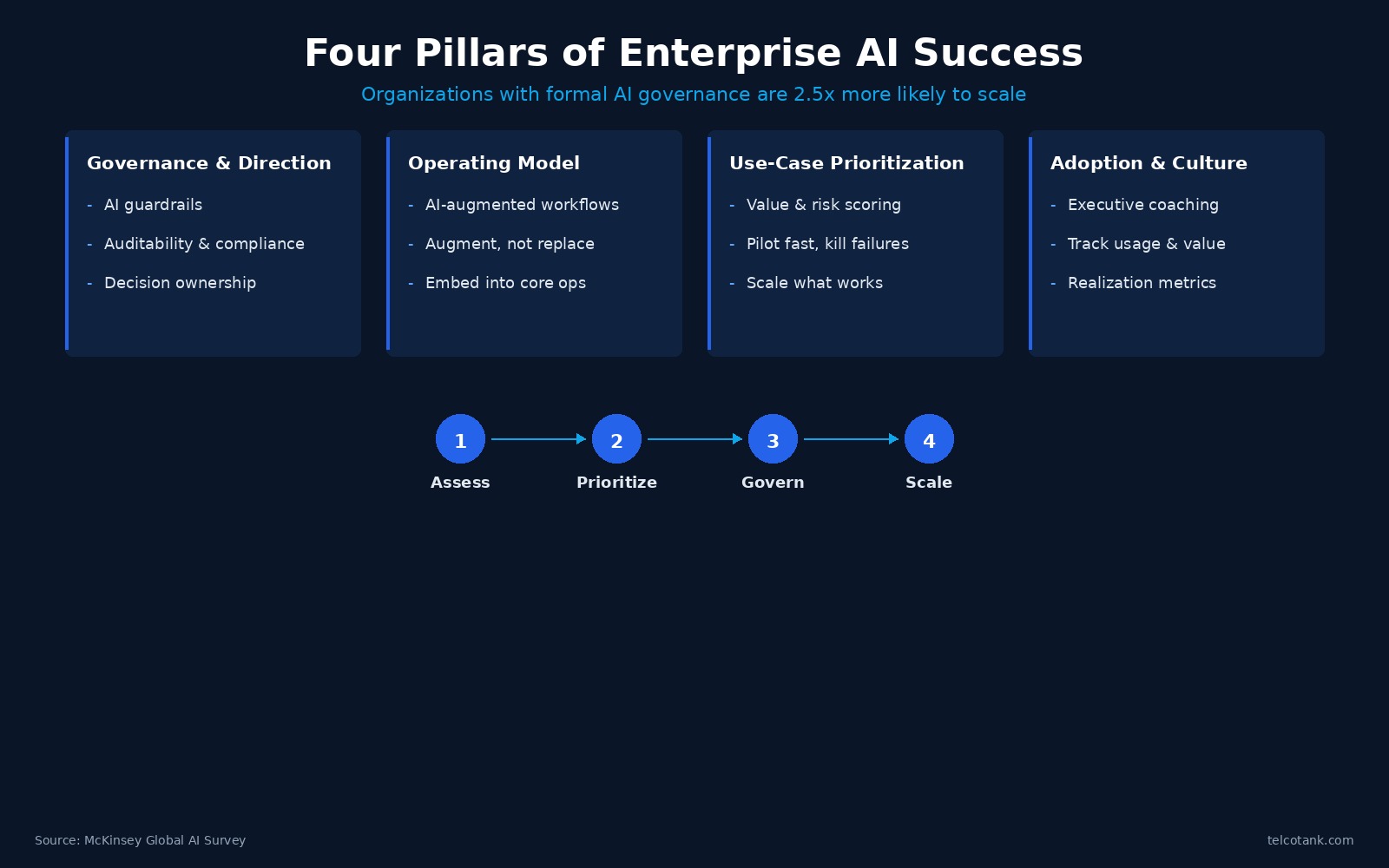
The data support this phased, business-driven approach. Organizations wey dey invest for readiness assessment and governance design before dem start AI development dey report 60 percent faster time to value wey person fit measure, 45 percent higher workforce adoption rates, and much lower regulatory and reputational risk. The reason no dey hide: dem sabi wetin to build, dem sabi who dey accountable, dem get the guardrails to move fast, and dem get the organizational buy-in to hold the effort through the setbacks wey must come with any enterprise transformation.
The strategic imperative clear. AI no be optional for enterprises wey wan remain competitive. But the road to value no be through more pilots, more models, or more technology money. Na through the hard, unglamorous work of governance, operating model design, use-case prioritization, and workforce adoption. The organizations wey go master these disciplines go catch the mighty value wey AI dey promise. Those wey go continue to treat AI like technology problem go continue to join the 80 percent wey dey fail.
For more articles visit our website: telcotank.com
Hakan Dulge
Founder & Managing Director, Telcotank. 20+ years for telecom transformation, AI strategy, and digital infrastructure advisory.