Key Point
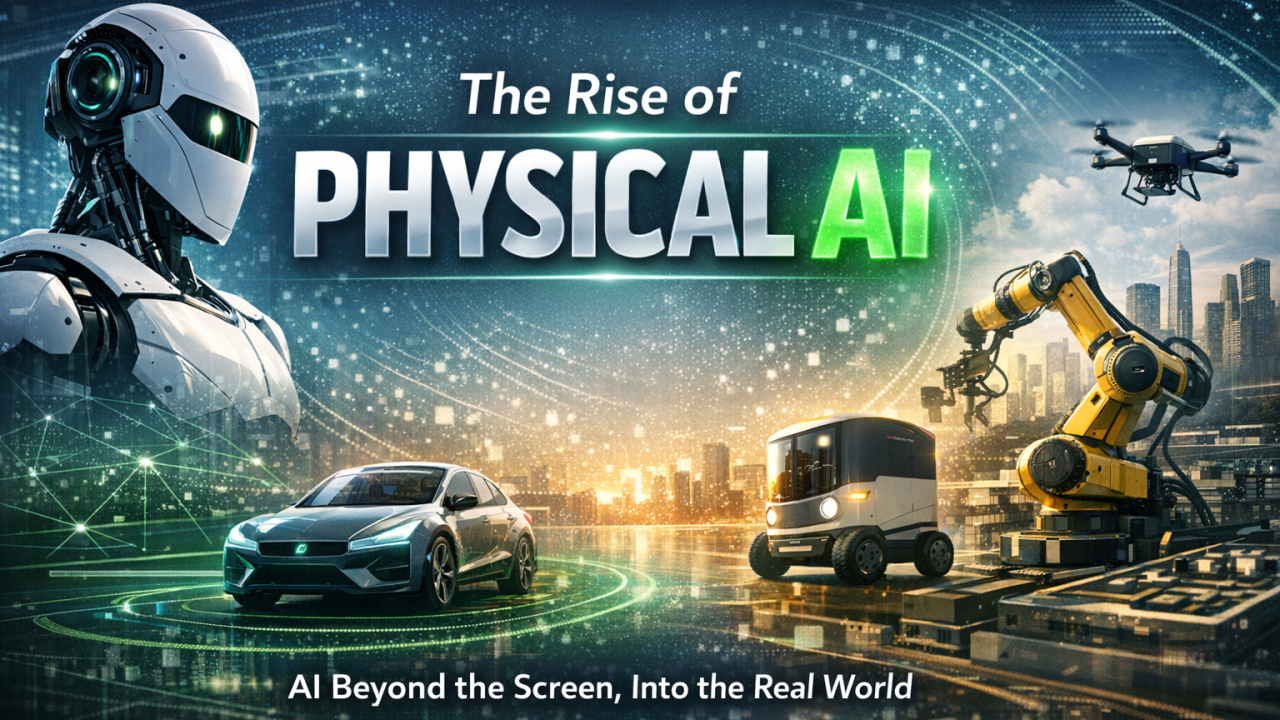
The coming of Physical AI — wey dey join perception, reasoning, and autonomous action — na structural shift from digital-first to embodied intelligence systems, with deployment applications across robotics, autonomous vehicles, and industrial automation.
For years, AI dey live inside apps, dashboards, and chat windows. For CES, that one change.
The main theme no be another model or faster chip: na Physical AI.
Under NVIDIA lead, the industry make one thing clear: The next wave of AI must see, reason, and act for the real world.
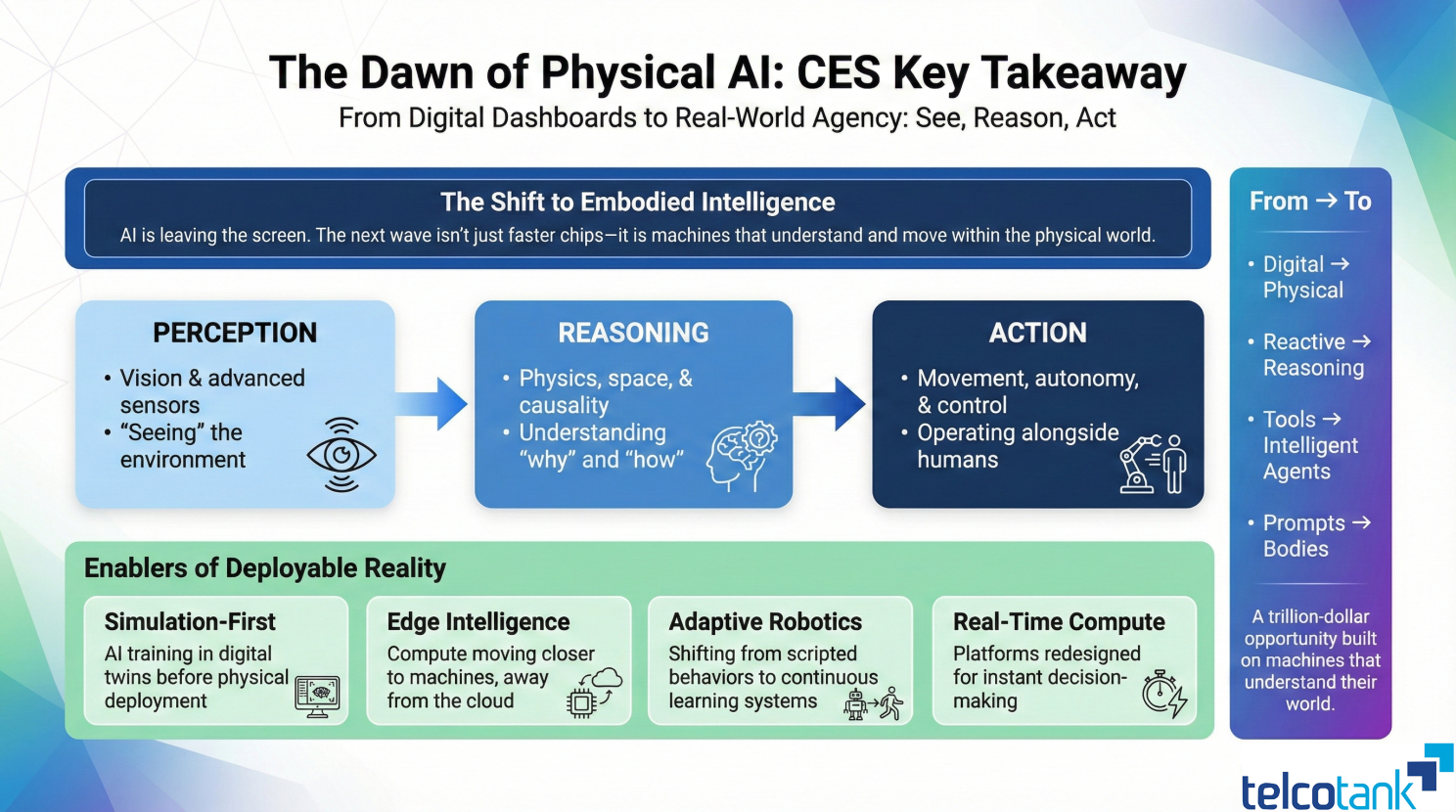
Physical AI dey combine three basic capabilities: perception through vision and sensors, reasoning about physics, space, and cause-and-effect, and action through movement, autonomy, and control.
This na the foundation for robots, autonomous vehicles, intelligent machines, and industrial systems — no be demos, but reality wey dem fit deploy.
Wetin stand out most no be just robotics or autonomy on their own. Na how everything come together: simulation-first AI training, edge intelligence dey move closer to machines, robotics dey shift from scripted behavior to learning systems, and compute platforms wey dem redesign for real-time decision-making.
AI no dey just assist humans again. E don dey begin operate side by side with us.
CES feel different because e signal structural shift: from digital to physical, from reactive to reasoning, from tools to intelligent agents wey get body.
The trillion-dollar opportunity wey dey ahead no go dey built on prompts alone. E go dey built on machines wey understand the world wey dem dey move inside.
This na the beginning of the Physical AI era.
And the question for leaders no longer be if this go change your industry — na how fast you go adapt.
Hakan Dulge
Founder & Managing Director, Telcotank. 20+ years for telecom transformation, AI strategy, and digital infrastructure advisory.